



IFS View On Extreme Behaviours
Why 'Out of Control' Behaviours Make More Sense Than You Think
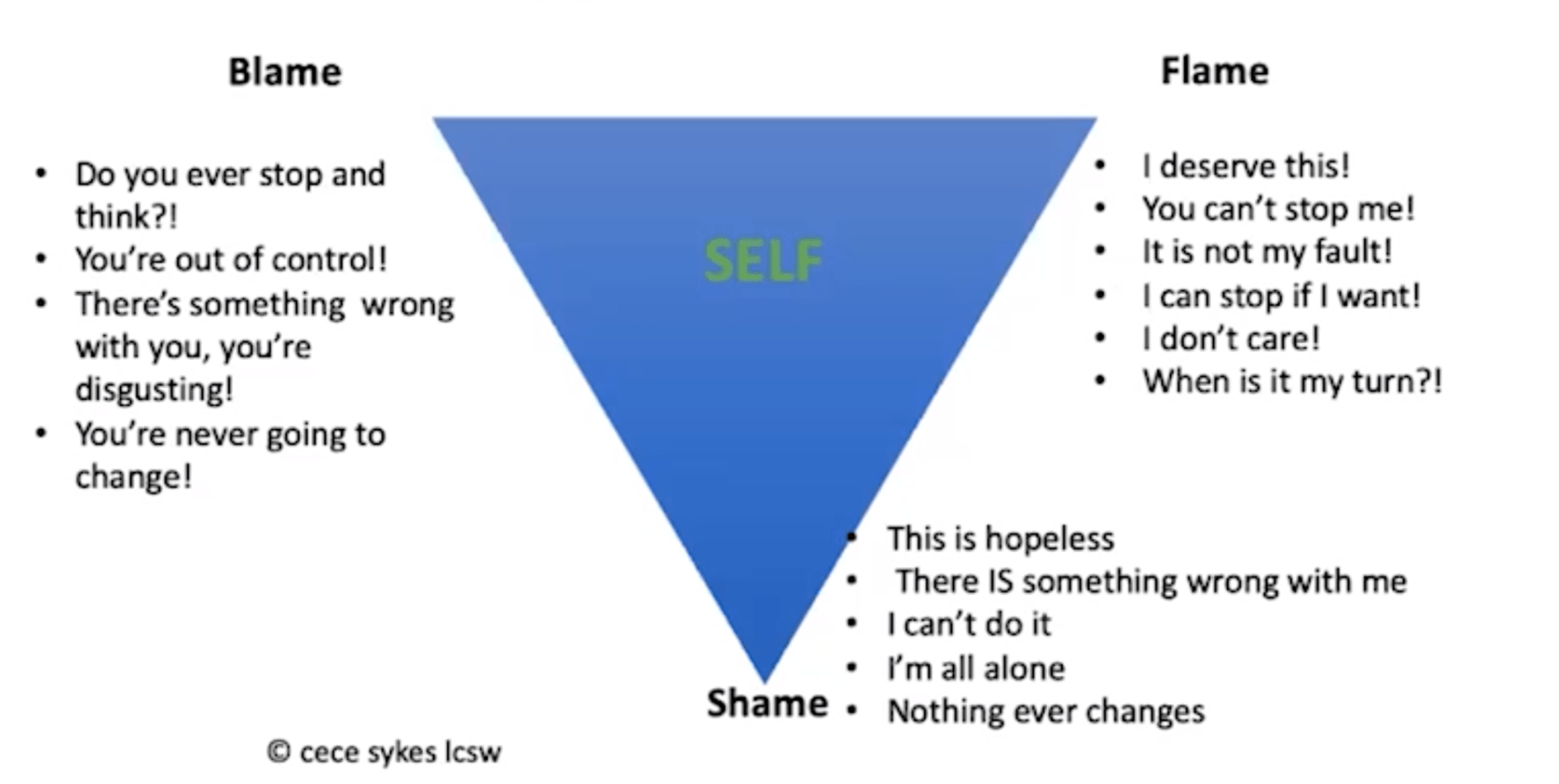
In this blog post we'll explore IFS therapy perspective on addiction, compulsion, and the cycle of shame which I have learnt in my training with Cece Sykes.
If you have you ever done something — eaten, drank, spent, raged, scrolled for hours — and immediately hated yourself for it and then done it again anyway: this post is for YOU!
What you're experiencing may be one of the most painful and misunderstood patterns in human psychology — and IFS therapy (Internal Family Systems) offers a surprisingly compassionate explanation for why it keeps happening.
It's not a lack of willpower
When we find ourselves caught in 'addictive' or compulsive cycles — whether that's rage, binge eating, self-harm, substance use, or compulsive scrolling — it can feel as though we're being taken over by a force we simply cannot stop. In IFS therapy, we'd describe this as being 'blended' with an extreme part of ourselves — what IFS calls a firefighter. These are the parts that react fast and hard when emotional pain threatens to break through. Their only goal is to get you relief. Now. Whatever it takes. And here's what makes this framework different from how we usually talk about these behaviours: IFS therapy doesn't see these parts as the problem. It sees them as desperate protectors — doing the only thing they know how to do to keep you safe from feelings that feel unbearable.
The tug-of-war inside
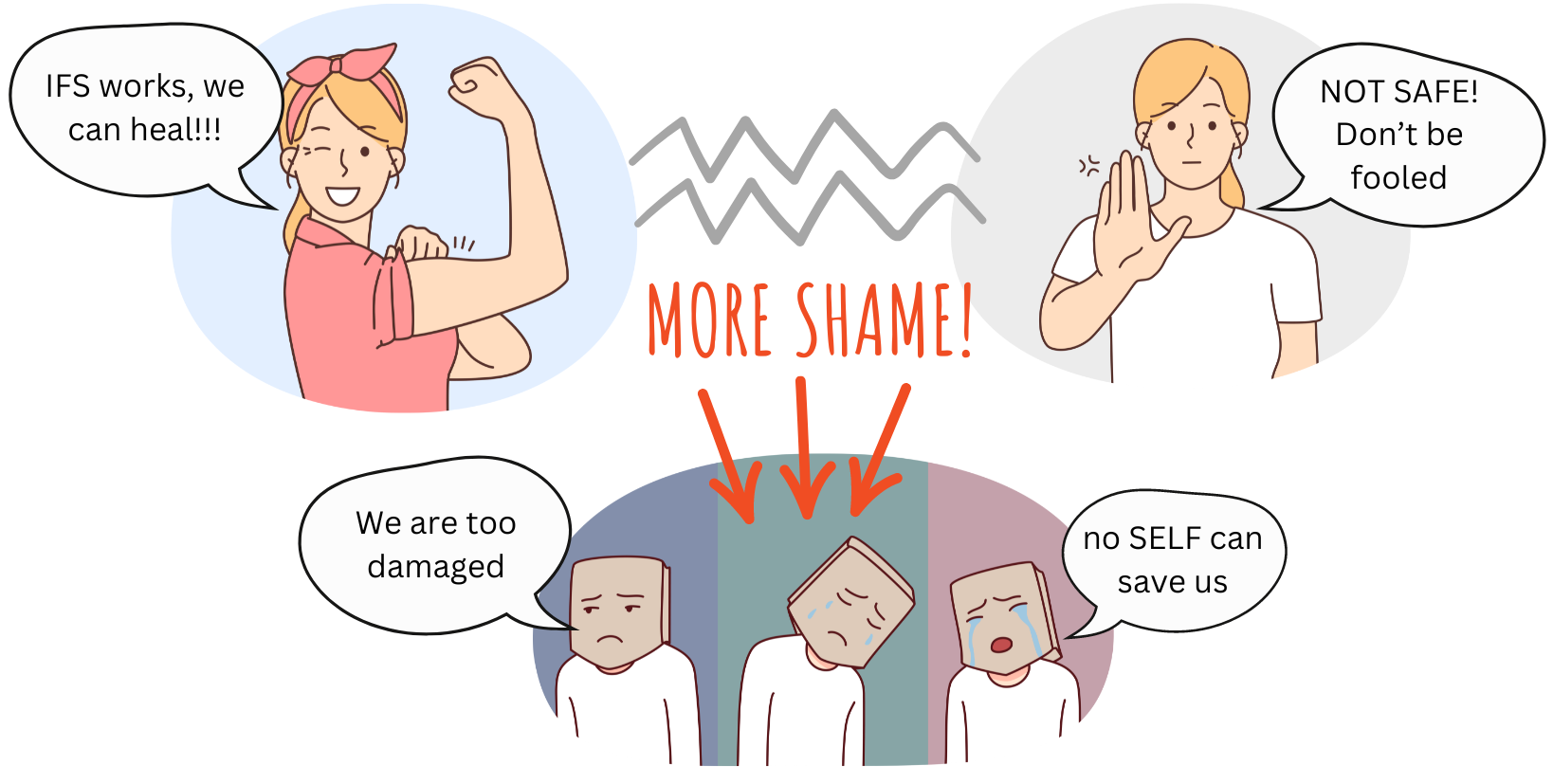
When an extreme firefighter takes over, something else usually follows: shame. And with shame often comes a fierce inner voice determined to get back in control. In IFS therapy, we call these voices managers — the parts of us that work hard to maintain a sense of order and self-image. They push for self-discipline, self-improvement, and 'being good'. They're often the reason you promise yourself: 'never again.' The trouble is, managers and firefighters are caught in a cycle that feeds itself:
Managers push hard for control and self-improvement→ This builds pressure, and buried emotional pain (what IFS calls exiled feelings) gets closer to the surface→ Firefighters react with extreme behaviours to douse that pain→ This creates shame and self-blame
→ Managers crack down harder in response→ And the cycle continues...
[The diagram at the top of the page illustrates this cycle visually ]
The parts we don't want to know about: the exiles
Underneath this tug-of-war are the parts IFS calls exiles — the most vulnerable parts of us, often carrying very old feelings: aloneness, shame, despair, the sense of being fundamentally unlovable or unseen.
These exiled feelings don't disappear just because managers work hard to prevent them. Life has a way of triggering them — in relationships, at work, in quiet moments we weren't expecting. And when they surface, firefighters rush in.
The painful irony is this: the shame that follows a firefighter's actions — from ourselves and often from people around us — adds to the burden the exile is already carrying. Which makes the exile more raw, more easily triggered. Which makes the whole cycle more likely to repeat.
IFS therapy doesn't take sides
Most approaches to addictive or compulsive behaviour — and many therapists — end up working with the inner manager: supporting self-control, building new habits, encouraging the client to 'do better'. IFS therapy takes a different position. It doesn't take sides.
While it absolutely acknowledges the manager's legitimate fears about the impact of extreme behaviours, IFS is equally curious about the positive intention behind the firefighter's actions. What pain is this part trying to relieve? What would happen if it stopped? What does it need to know before it can soften? This isn't about excusing harmful behaviour; it's about understanding it deeply enough to actually change it, rather than just suppressing it until the pressure builds again.
What healing actually looks like
The aim of IFS therapy in this kind of work is to gradually slow down and eventually reverse the cycle — not by strengthening the manager's grip, but by bringing genuine care and curiosity to all the inner players involved. When extreme firefighters feel understood — rather than shamed or eliminated — they don't need to work so hard. When exiled feelings are finally witnessed and held with compassion (what IFS calls unburdening), they lose their desperate urgency. And when managers no longer need to brace for disaster, they can finally relax. What emerges from this process is something IFS calls Self-led living: a calmer, more grounded way of being in the world, where you have genuine choice in how you respond — rather than being hijacked by parts trying to survive.
Does this resonate?
If you recognise yourself in this cycle — if part of you wants to stop, and another part simply can't — it might be worth exploring what your system is actually trying to protect you from.
IFS therapy can help you do exactly that, with curiosity rather than judgement. If you'd like to find out more about working together, feel free to get in touch.
You can also
watch lead IFS trainer Cece Sykes explain this process in her workshop on IFS and addictive processes —the video available on the main IFS therapy page of this website.